

NAD+ is everywhere in wellness marketing—and that makes a calm explanation especially useful. It is a molecule your body already makes and uses. That does not mean every NAD+-related product has proven clinical benefits, or that one delivery route can borrow evidence from another.
Quick take: NAD+ is a coenzyme involved in cellular energy and many biochemical reactions. Human research on NAD+ precursors is active, but evidence for specific wellness outcomes and delivery methods remains incomplete.
What NAD+ does
Nicotinamide adenine dinucleotide—NAD+—helps cells transfer energy and supports enzymes involved in metabolism, DNA-related processes, and cellular signaling. Levels and NAD-related metabolism can change with age and health, which is one reason researchers are studying ways to influence the pathway.

NAD+ is not the same as every “NAD booster”
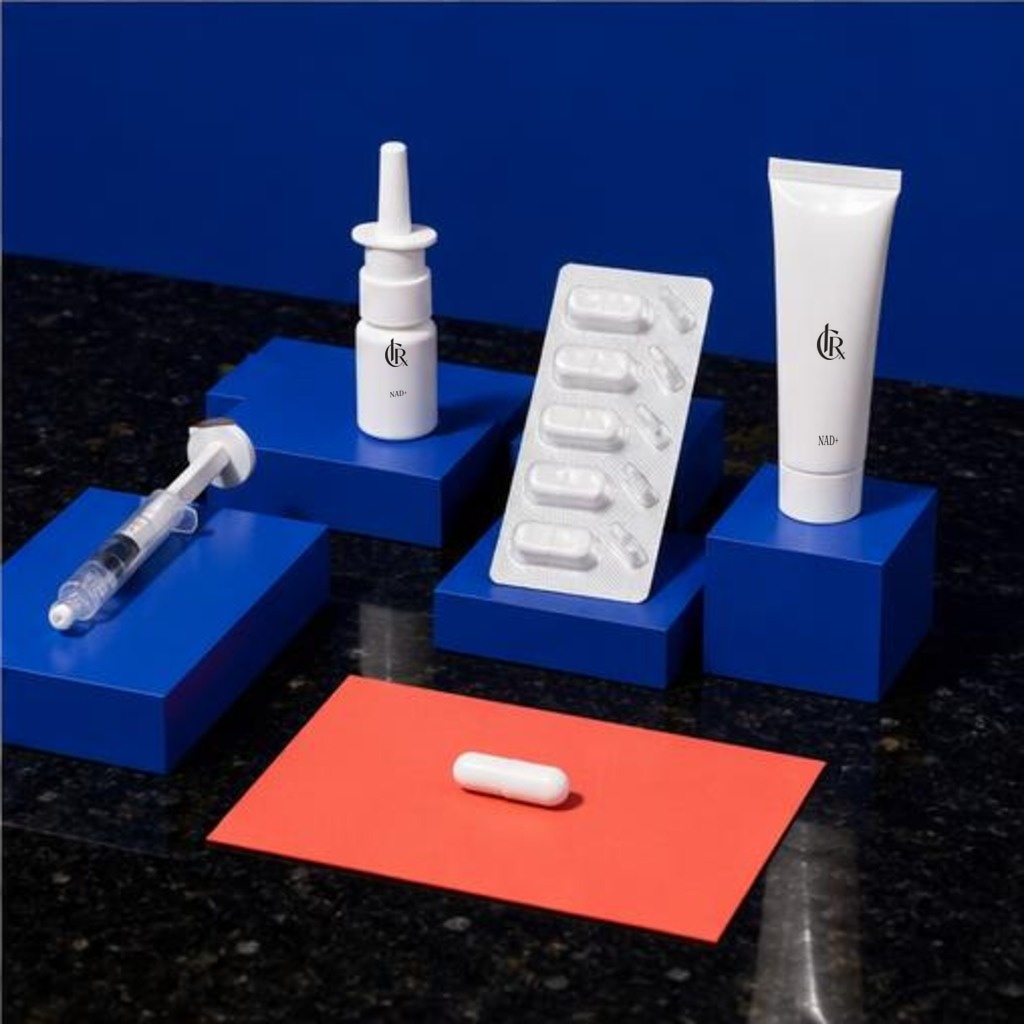
Products may contain NAD+ itself or compounds the body can use in NAD-related pathways, including forms related to vitamin B3. An oral precursor, film, nasal product, cream, or injection has a different formulation and route. Absorption, dose, evidence, risks, and intended use cannot be assumed to transfer from one to another.
What the research can—and cannot—tell us
Human studies suggest some NAD+ precursors can change blood markers of NAD metabolism. The harder question is whether that reliably produces meaningful improvements in energy, cognition, recovery, metabolic health, or healthy aging. Reviews of the clinical evidence describe a developing field with varied study designs, populations, doses, and outcomes.
- A biomarker change is not automatically a felt or clinically important benefit.
- Small or short studies may not answer long-term safety and effectiveness questions.
- Evidence for one ingredient or route does not validate every product in the category.
- “Supports cellular energy” is not the same as treating fatigue or a medical condition.
Start with the symptom, not the trend
Persistent fatigue, concentration changes, weakness, sleepiness, or exercise intolerance can have many causes. A clinician may need to consider sleep, nutrition, anemia, thyroid conditions, medication effects, mood, infection, or other health issues before discussing a wellness intervention.
Questions for a clinician
- What exact ingredient, formulation, and route are we considering?
- What human evidence supports this use—not just a related biomarker?
- Is the product FDA approved for this purpose, used off label, compounded, or a dietary supplement?
- What side effects, interactions, and quality questions matter for me?
- How would we know whether it is helping, and when would we stop?
Frequently asked questions
Is NAD+ a vitamin?
NAD+ is a coenzyme. The body can build it through pathways that involve vitamin B3-related compounds, but NAD+ itself is not simply interchangeable with a standard vitamin supplement.
Does higher NAD+ guarantee more energy?
No. Cellular biochemistry, a blood marker, and the way a person feels are related but not identical. Symptom evaluation and meaningful outcomes matter.
Sources and editorial note
- PubMed: NAD+ precursor supplementation in human ageing—clinical evidence and challenges
- NIH Office of Dietary Supplements: Niacin fact sheet
Educational information only; not medical advice. Evidence varies by ingredient, formulation, route, and intended use. Prescription treatment requires an independent evaluation by a licensed clinician.